Why Your Flange Joints Leak: Common Pressure Failure Causes
Flange leaks usually stem from pressure mismatches, gasket failure, or improper installation. This guide lists common symptoms, likely causes, and fixes for procurement managers and engineers. Check torque, surface finish, and material compatibility to restore joint integrity and prevent future failures.
- Recurring flange leaks rarely stem from a single error. They usually involve a combination of pressure mismatch, surface damage, or poor assembly.
- Gasket selection is the most common failure point. The material must match both the medium and the operating temperature range.
- Surface finish matters as much as bolt torque. Scratches or burrs on the sealing face will compromise joint integrity.
- Procurement teams should verify that flange pressure ratings match the actual design pressure of the system, not just the pipe nominal size.
- A preventive maintenance schedule focused on torque checks and visual inspection catches small issues before they become full leaks.
What does a flange leak actually look like?
A flange leak is a visible failure of the sealing path between two pipe sections. It is rarely a single, isolated event. In practice, it often starts as a thin bead of fluid that follows a specific path around the gasket. The shape of that path gives the technician a direct clue about the cause.
A leak centered on the gasket usually points to over-compression or pressure exceeding the gasket rating. The fluid finds a path through the center because the gasket material has been forced past its limit. A leak appearing near the bolt holes suggests uneven torque or a damaged sealing surface. The gasket is not being held flat against the flange face in those areas, so the fluid leaks out at the points of lowest compression.
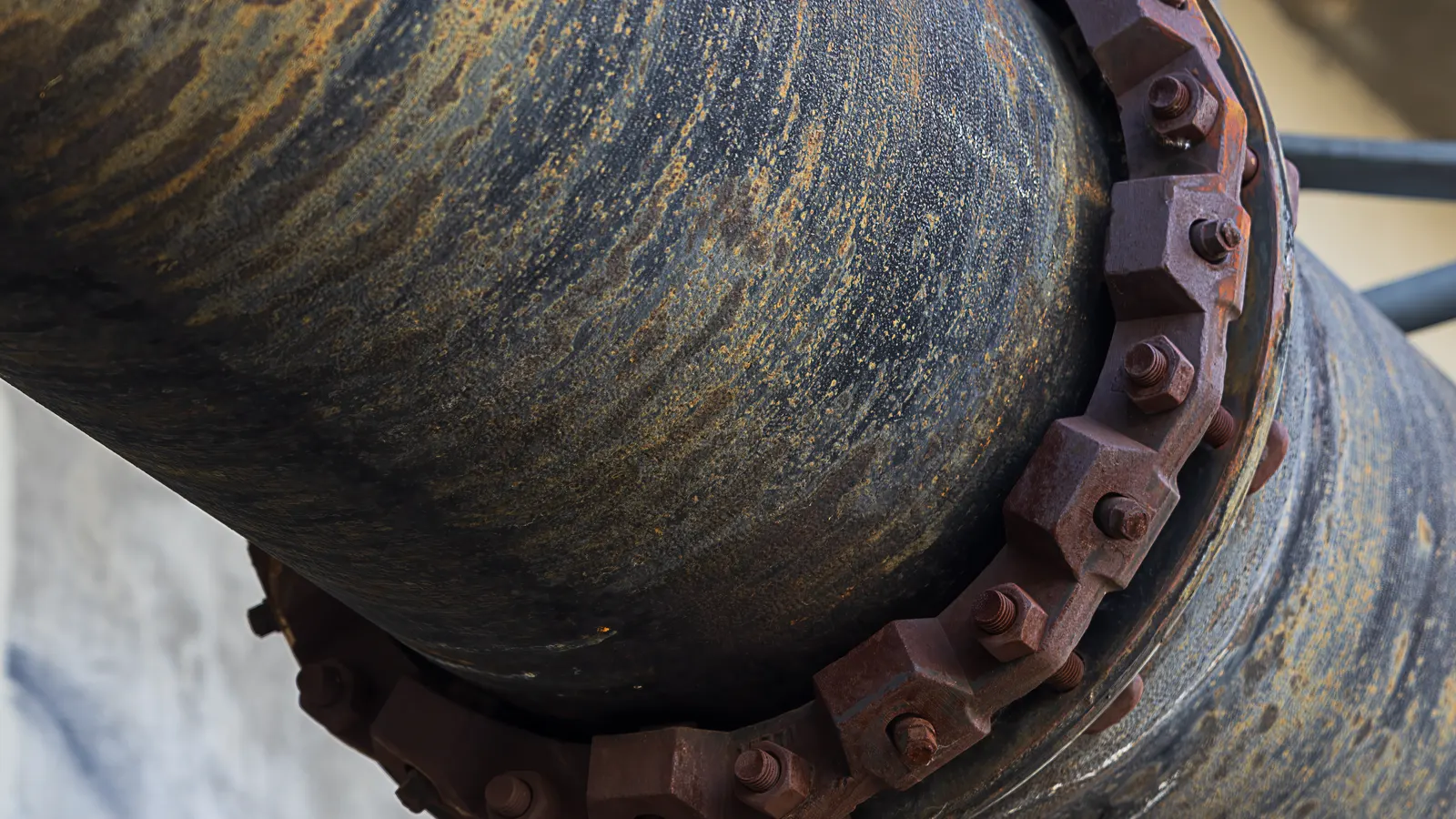
If the leak travels along the outside edge of the flange face, the problem is often mechanical. Corrosion, misalignment, or a warped flange can prevent the faces from seating evenly. This creates a gap where the two metal surfaces should meet. Procurement managers and site engineers frequently encounter these leaks after the system goes live. The first leak often appears minor, but it is a warning signal.
Ignoring the initial leak allows the process medium to reach the bolt threads and the flange face. Water, for example, can rust the threads, making future disassembly difficult. Chemicals can pitting the surface, creating permanent leak paths. The joint integrity degrades over time. What begins as a small drip can turn into a burst joint, leading to downtime, waste, and safety hazards.
Why do pressure mismatches cause leaks?
Every flange has a defined maximum working pressure. This rating is not arbitrary. It is determined by the flange class, the material grade, and the operating temperature of the medium. A common mistake in procurement is assuming that a flange of a certain nominal size can handle any pressure level. This is incorrect. The pipe size does not define the pressure rating. The flange class and material grade do.
If a system operates at a pressure higher than the flange rating, the gasket will not hold. The fluid pushes the sealing surfaces apart with greater force than the bolts can counteract. The gasket may extrude into the pipe bore or deform under stress. This is a pressure mismatch. The joint fails because the mechanical forces exceed the design limits of the components.
Another common cause is thermal cycling. A system may run at a low pressure during startup but reach a high pressure during normal operation. The flange rating must cover the maximum operating pressure, including any surge or transient events. If the design pressure is exceeded, even briefly, the joint will fail. Thermal expansion also plays a role. As the pipe heats up, it expands and can pull the flange faces apart. If the gasket is not designed for the temperature range, it will lose its sealing ability.
How does gasket failure lead to leaks?
The gasket is the seal. It fills the gap between the two flange faces and prevents fluid escape. Gasket failure is the most frequent cause of flange leaks. The gasket can fail in several distinct ways.
It can compress too much and extrude into the pipe bore. This happens when the flange faces are bolted too tight or the gasket is too soft for the service. The material squeezes out of the sealing area and enters the pipe, reducing the flow area and creating a leak path. It can compress too little and not seal the gaps. This happens when the bolt torque is too low or the gasket is too hard. The gasket does not conform to the surface roughness, leaving gaps for the fluid to escape.
It can tear if the fluid is abrasive or corrosive. Particles in the medium can grind down the gasket material during startup or shutdown. Chemicals can eat through the gasket, making it brittle and porous. It can degrade if the temperature is too high or the chemical compatibility is poor. A gasket designed for low-temperature water service will melt or soften in a high-temperature steam system.
Gasket selection is a critical part of the procurement process. The material must match the medium. A rubber gasket may not handle high temperatures or aggressive solvents. A metal gasket may not seal if the flange surface finish is poor. The gasket must also match the flange pressure class. A gasket rated for a lower class will fail under higher stress. The wrong gasket is a guaranteed leak.
How does improper installation cause leaks?
Even a perfect gasket will fail if the installation is wrong. Improper installation is a leading cause of joint integrity loss. The most common errors involve bolt torque, surface condition, and alignment.
Bolt torque is the force that compresses the gasket. If the torque is too low, the gasket does not compress enough to seal the gaps. If the torque is too high, the gasket compresses too much and may extrude or tear. The torque must be applied in the correct sequence. Cross-pattern or star-pattern tightening is standard. This ensures even compression across the flange face. If the bolts are tightened in a random order, one side of the flange will be more compressed than the other, leading to a leak on the under-compressed side.
Surface condition is often overlooked. The flange faces must be clean and free of burrs. Any scratch or pit on the sealing face will create a leak path. The surface finish must match the gasket material. A rough surface may require a softer gasket to conform to the irregularities. A smooth surface may allow a harder gasket. If the surface is pitted from previous corrosion, no gasket will seal it. The flange may need to be machined or replaced.
Alignment is another factor. If the flange faces are not parallel, the gasket will compress unevenly. One side may seal while the other leaks. This is common in large systems where the pipe weight causes sag. The flange faces must be aligned before bolting. Shims or alignment tools can be used to correct minor misalignments. If the misalignment is severe, the flanges themselves may be damaged.
What should you check before purchasing?
Before you buy a flange joint, verify the pressure rating. Check the flange class. Check the material. Check the gasket material. These three factors determine the joint integrity.
The flange class must match the system design pressure. Do not assume that a higher nominal size means a higher pressure rating. A 10-inch flange and a 6-inch flange of the same class have different pressure ratings. The rating is based on the area of the sealing surface and the bolt load. A larger flange has a larger sealing area, but the bolt load per unit area may be lower. The specific class rating must be verified against the system requirements.
The material must be compatible with the medium. Carbon steel may work for water but not for aggressive chemicals. Alloy steel or stainless steel may be required for corrosive services. The gasket material must also be compatible. A paper gasket may not handle high temperatures. A metal gasket may require a smooth surface finish. The wrong material combination will lead to rapid failure.
How to fix a recurring flange leak
If you have a recurring flange leak, follow a structured approach. Do not just replace the gasket and hope for the best. Identify the root cause.
First, isolate the section. Reduce the pressure and drain the fluid. This makes it safe to inspect. Second, inspect the flange faces. Look for scratches, pits, or corrosion. If the surface is damaged, the flange may need machining or replacement. Third, inspect the gasket. Look for signs of extrusion, tearing, or degradation. If the gasket is damaged, replace it with the correct material. Fourth, check the bolt torque. Use a torque wrench and apply torque in the correct sequence. Fifth, reassemble the joint and test it. Monitor for leaks over time.
If the leak returns, the root cause is not the gasket. It is likely the pressure rating, the surface finish, or the installation method. You must address the underlying issue. A recurring leak is a sign that the system design or the installation procedure is flawed.
Prevention tips for long-term joint integrity
Prevention is cheaper than repair. A small investment in proper installation and maintenance saves time and money.
- Verify the pressure rating. Check the flange class and material against the system design pressure. Do not guess.
- Select the correct gasket. Match the gasket material to the medium, temperature, and pressure.
- Clean the flange faces. Remove burrs, scratches, and debris before assembly.
- Use the correct torque. Apply torque in a star pattern. Do not over-torque or under-torque.
- Inspect regularly. Check for leaks, corrosion, and bolt looseness on a scheduled basis.
- Document the assembly. Keep records of torque values, gasket material, and surface condition. This helps with future maintenance.
A well-maintained flange joint can last for years. A poorly maintained joint will fail repeatedly. The difference is in the details.
Frequently asked questions
What is the most common cause of a flange leak?
Gasket failure is the most common cause. It happens when the gasket material does not match the operating conditions or when the bolt torque is incorrect.
Can a flange leak be fixed with a new gasket?
Sometimes, but not always. If the flange faces are damaged or the pressure rating is wrong, a new gasket will not solve the problem. You must address the root cause.
How do I know if my flange is rated for the system pressure?
Check the flange class and material. The pressure rating is based on the class and the temperature of the medium. A higher nominal size does not automatically mean a higher pressure rating.
What happens if I over-torque the bolts?
Over-torquing can compress the gasket too much. This can cause the gasket to extrude into the pipe bore or tear. It can also damage the flange faces and weaken the bolt threads.
Should I use a different gasket if the leak is small?
A small leak is a warning, not a minor issue. It indicates that the joint integrity is compromised. Replace the gasket only after checking the flange faces and the pressure rating.