PVC vs PE: Which Plastic Pipe Is Better for Drainage?
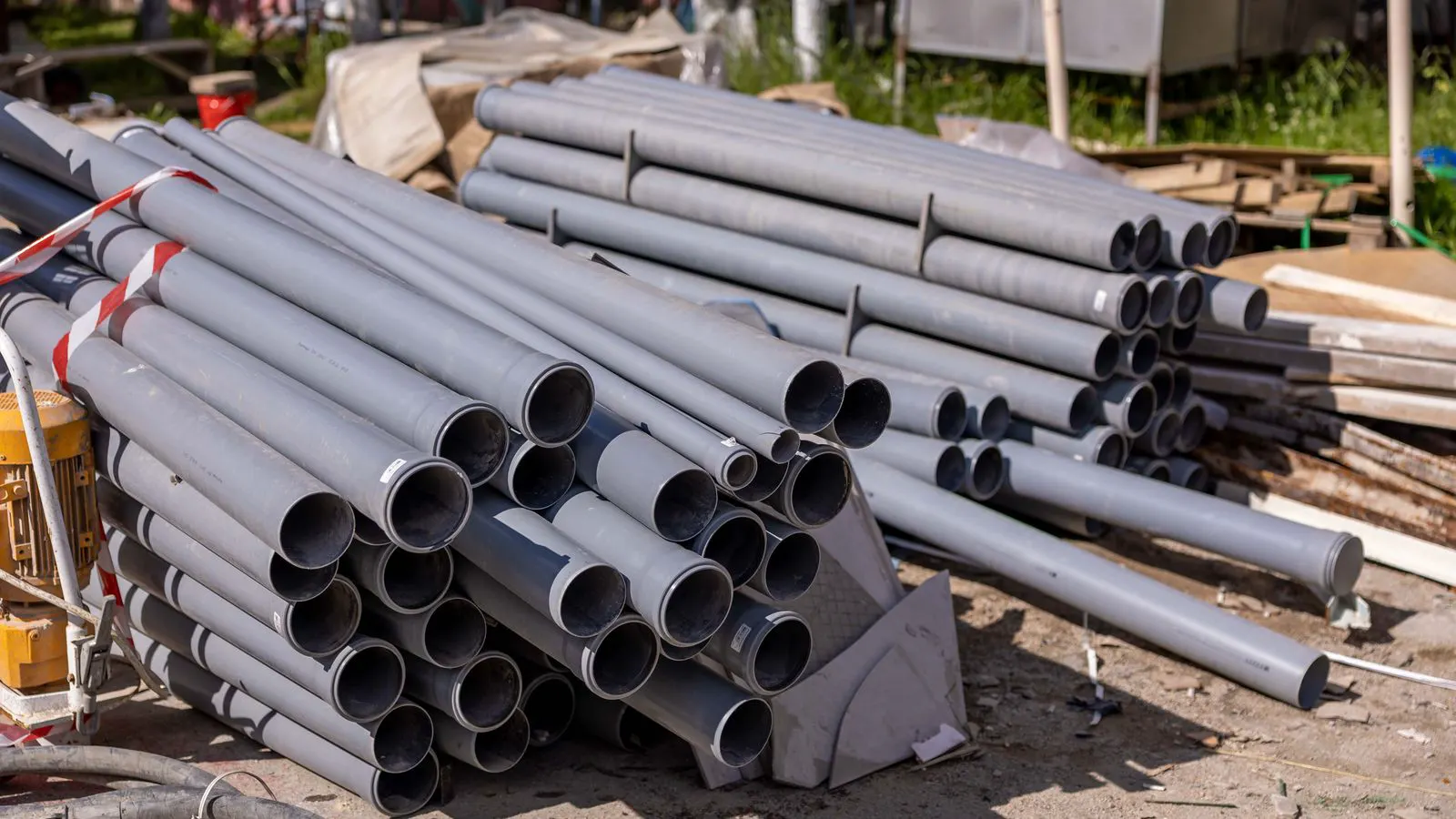
PVC and PE each suit different drainage applications. PVC handles gravity flow better in tight spaces. PE excels in pressure service and flexible routing. The right choice depends on slope, depth, and soil conditions.
- PVC is preferred for gravity drainage in buildings and shallow trenches due to its rigidity and smooth interior.
- PE is preferred for pressure drainage, long runs, and areas with high soil movement or rock.
- Joint method and installation tolerance differ significantly between the two materials.
- Long term cost depends on installation speed, maintenance access, and expected soil movement.
Which material handles gravity flow better?
Both PVC and PE work for gravity drainage. The difference comes down to how the pipe behaves during installation and long term service. PVC is rigid. A straight run stays straight. This makes it predictable for gravity lines where the slope must match the design exactly. A small deviation in the pipe diameter or a joint that shifts slightly can change the flow profile.
PE is flexible. This is an advantage when routing through uneven ground or around obstructions. A PE line can bend gently to follow the grade without extra fittings. For shallow gravity lines in residential settings, PE can sometimes be laid more quickly because it does not require the same precision in alignment as PVC. However, the flexibility means the pipe can sag if unsupported at joints or bends. Proper support spacing is required to keep the interior surface smooth.
The smoothness of the interior is the same for both materials. Both offer low friction coefficients, which helps maintain flow velocity in the pipe. This reduces the chance of sediment buildup. The difference is not in the friction itself, but in how easily the pipe holds its shape over time under soil pressure and thermal cycling.
How do the joints and connections differ?
Joints define the installation experience and the failure points. PVC uses solvent welding or cement joints. The glue creates a bond that is stronger than the pipe itself when done correctly. This requires a clean, dry surface and the right temperature. If the installer skips the primer or applies too much cement, the joint becomes weak.
PE is joined by heat fusion, either butt fusion or socket fusion. This also creates a permanent connection. The process requires heating the pipe ends and pressing them together. The quality of the joint depends on the operator and the equipment. A poor heat fusion can leave a weak spot that fails under pressure or soil load.
For drainage, the choice of joint matters less than for pressure lines, but it still affects installation speed. Solvent welding is fast and does not require special power tools. Heat fusion requires a generator or battery pack for the heater. In remote sites, this can add cost and time. On the other hand, PE does not require the precise alignment needed for PVC. A small misalignment in a PE joint is easier to correct than in a PVC joint.
What are the cost differences in the field?
The pipe itself is often similarly priced per meter. The real cost difference appears in installation and maintenance. PVC is lighter and easier to cut. A simple hand saw or a PVC cutter is enough. PE can be cut with a hacksaw, but the material is tougher and the cut must be smooth for fusion.
Installation speed is a factor. PVC can be laid quickly in straight runs. PE can be laid quickly in curved runs. If the site has many bends or a complex layout, PE may save labor time. If the site is a straight trench with standard fittings, PVC is usually faster.
Long term, the cost of repair is similar. Both materials are repairable with patches, couplings, or replacement sections. The main cost driver is whether the pipe fails in the first place. PVC can crack if buried too deep without proper support or if the soil shifts. PE can kink if buried too close to a rock or if the trench is compacted too tightly.
When should you choose PVC for drainage?
PVC is the better choice when the line is shallow, straight, and in a controlled environment. It is common in building drainage, stormwater inresidential areas, and small commercial lines. The rigid wall makes it easy to verify the slope during installation. An engineer can check the grade at each joint and know the line is correct.
PVC also has a larger selection of fittings for small diameters. If the line is under a certain size, PVC is often the only option that fits the space. The interior of PVC is very smooth, which helps in low slope lines where velocity is low.
The limitation of PVC is its brittleness. It can crack if struck by a tool or if the soil moves. It also has a limited temperature range. Hot water lines require special formulations, but for drainage, temperature is usually not an issue.
When should you choose PE for drainage?
PE is the better choice when the line is deep, long, or in difficult ground. It is common in large stormwater mains, industrial drainage, and lines that must pass under roads or through rocky soil. The flexibility allows the pipe to absorb ground movement without cracking. This is a major advantage in areas with expansive soils or where the ground settles over time.
PE also works well for pressure drainage, such as pumped systems or lines that need to handle surcharge. The pressure rating of PE is higher than PVC for the same wall thickness. This makes it suitable for lines where the flow is not purely gravity driven.
The limitation of PE is that it requires more support during installation. Without proper backfill and support, the pipe can deform. The joint quality also depends more on the installer skill. A poorly fused joint is a weak point that can fail under load.
What about environmental and health factors?
Both PVC and PE are widely used in potable water and drainage, so they meet strict safety standards. PVC contains plasticizers in some formulations, but for drainage and pressure applications, the formulations are typically stable and non leaching. PE is a simple polymer with no additives that leach into the water.
The environmental impact depends on the end of life. Both materials are recyclable in some regions, but the recycling infrastructure varies. PVC is more difficult to recycle because of the additives, while PE can be ground down and reused as new pipe or as mulch. This is a consideration for projects with sustainability goals.
The health factor is minimal for drainage, as the water is not for drinking. However, if the drainage line is near a building, the material should be chosen to prevent any potential migration of chemicals into the soil. Both materials are stable and do not release harmful substances under normal conditions.
How to decide for your specific project
The decision comes down to three questions. First, what is the soil and the depth? If the soil is stable and the trench is shallow, PVC is a safe bet. If the soil is unstable or the trench is deep, PE is safer.
Second, what is the layout? If the line is straight and short, PVC is easier to install. If the line is long and has bends, PE is easier to route.
Third, what is the flow type? If it is pure gravity with a low slope, PVC is good. If it is pressure driven or has surcharge, PE is better.
The final check is the installation team. If your team is experienced with PVC solvent welding, PVC will be faster. If your team is experienced with PE heat fusion, PE will be faster. The material should match the team’s skills to avoid costly rework.
Common mistakes to avoid
One common mistake is using PVC for deep trenches without proper support. The soil pressure can crush the pipe over time. A second mistake is using PE without checking the support spacing. If the pipe is not supported at the correct intervals, it can sag and create a low point where sediment collects.
A third mistake is ignoring the slope. Both materials are good for gravity, but the slope must be correct. A slope that is too shallow leads to sediment buildup. A slope that is too steep can cause erosion and noise.
The last mistake is not checking the joint quality. A bad joint is the most common cause of failure. Whether it is a PVC cement joint or a PE fusion joint, the connection must be done according to the manufacturer’s instructions.
Frequently asked questions
Is PVC cheaper than PE for drainage?
The pipe cost is often similar. The total cost depends on the installation method and site conditions. PVC is usually faster for straight, shallow lines. PE is faster for long, curved lines.
Can PVC be used for pressure drainage?
PVC can be used for pressure drainage, but PE has a higher pressure rating for the same wall thickness. For high pressure lines, PE is usually the preferred material.
Which material lasts longer in the ground?
Both materials have a long service life. PVC can crack if the soil moves. PE can deform if not supported. Proper installation is the key factor for both.
Do I need a permit for drainage pipe selection?
Yes, local regulations often specify the minimum material and size for drainage lines. Check with the local authority before selecting the material.
Can I mix PVC and PE in the same line?
It is possible but not recommended. The joints between the two materials are difficult to make and are a weak point. It is better to use one material throughout the line.